US Pet Insurance Market Report 2026: Trends, Data & Strategic Outlook
In-depth analysis of the $5.4B industry, including 2026-2034 growth forecasts, competitive landscape shifts, and the impact of veterinary inflation.

Michael Torres
Insurance Analyst
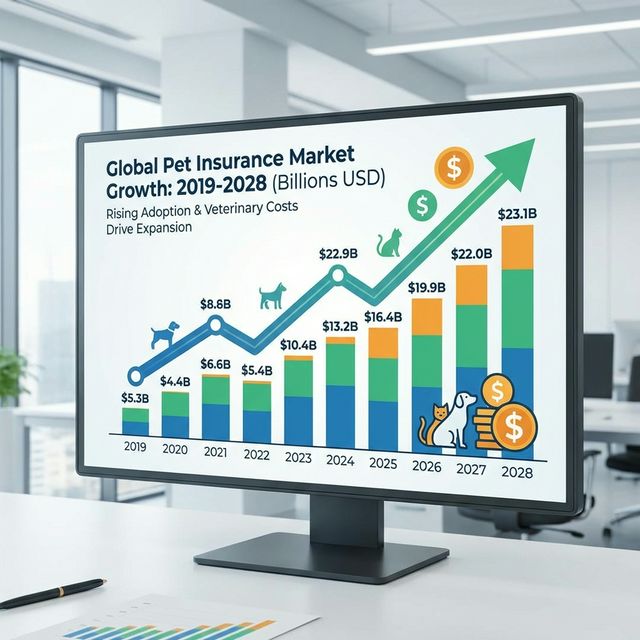
The US pet insurance industry is at a historic turning point. Once a niche financial product, it has evolved into a core risk management tool for millions of American households.
According to the latest 2024-2025 Market Research, the sector is showing remarkable resilience despite macroeconomic headwinds. driven by the deepening trend of “Pet Humanization” and the explosive growth of veterinary medical capabilities.
📊 Market Overview & Growth Forecast
The core metrics for 2025 paint a picture of an industry in rapid expansion, yet still in its early stages compared to mature markets like the UK or Sweden.
| Metric | 2024 (Actual/Est.) | 2025 (Forecast) | 2034 (Forecast) |
|---|---|---|---|
| Market Size (GWP) | $5.11B - $5.44B | $6.21B | $31.4 Billion |
| Growth Rate (CAGR) | - | ~19.1% | ~19.16% |
| Penetration Rate | ~3.9% | ~4.5% | > 10% |
Key Insight: The US market is projected to grow 6x over the next decade, potentially reaching $31.4 billion by 2034.
The “Pet Humanization” Driver
The primary engine of this growth is cultural. With 71% of US households owning a pet, animals are increasingly viewed as equal family members. This emotional shift changes veterinary spending from a calculation of “economic value” to one of “emotional value,” making life-saving treatments (like $10,000 cancer therapies) a necessity rather than an option.
🏆 Competitive Landscape: A New King
2024 marked a major reshuffling of the US pet insurance hierarchy. For the first time, long-time market leader Nationwide was surpassed by the vertically integrated insurtech giant Trupanion.
Top 3 Players by Market Share
- Trupanion (23.5%) 🔼
- Strategy: Vertical integration with “Vet Direct Pay.” Their software sits in vet clinics, paying claims in seconds at checkout.
- Moat: Resolves the “reimbursement gap” where pet owners must front thousands of dollars.
- Nationwide (21.9%) 🔽
- Challenge: Struggling with legacy “Benefit Schedule” plans that failed to keep up with inflation. Recently non-renewed ~100,000 older policies to pivot to modern “Whole Pet” plans.
- Strength: Still dominates the Exotic Pet niche.
- Independence Pet Group (10.6%) ⏺️
- Strategy: The “Aggregator.” Owns multiple brands including ASPCA, Figo, Fetch, and AKC Pet Insurance. Targets every demographic segment through distinct brand identities.
The Disruptor: Lemonade
While smaller in share, Lemonade continues to disrupt with AI. Its “AI Jim” bot claims to settle simple claims in as little as 3 seconds, appealing strongly to digital-native Gen Z pet owners.
⚠️ Structural Challenges: The “Death Spiral” Risk
Despite growth, the industry faces significant “growing pains.”
1. Veterinary Inflation (Vet CPI)
Veterinary costs have risen by over 60% in the past decade.
- Technology: Adoption of human-grade tech (MRI, CT, Laparoscopy).
- Labor: Severe shortage of vets and technicians driving up wages.
- Consolidation: Private equity buying clinics and standardizing (raising) prices.
2. Premium Spikes
To survive rising claim costs, insurers must raise premiums.
- Case Study: Healthy Paws has filed for rate increases as high as 44.8% in states like Washington.
- Impact: This can trigger a “death spiral” where healthy pets leave the pool due to high costs, leaving only sick pets, which forces premiums even higher.
🔮 Strategic Outlook (2026-2030)
Where is the industry heading?
1. The Death of “Reimbursement”
Direct Pay is the future. Trupanion proved that customers prefer not to pay out-of-pocket. Competitors like Pets Best and various IPG brands are rushing to build their own direct payment rails.
2. Employee Benefits Boom
The B2B2C channel is surging. In 2025, 36% of companies with >500 employees offer pet insurance as a voluntary benefit—a 22% increase in just five years. In the war for talent, pet benefits are a key differentiator.
3. Regulatory Standardization
The NAIC Model Act is being adopted by more states (CA, WA, DE). This will standardize definitions of “Pre-existing Conditions” and enforce fairer wait periods, forcing insurers to compete on transparency rather than fine print.
📝 Conclusion for Pet Owners
The era of cheap, low-limit insurance is ending. The future belongs to comprehensive, high-limit policies that can handle the reality of $15,000 vet bills.
Recommendations:
- Lock in Early: Insure pets as puppies/kittens to avoid pre-existing condition exclusions.
- Prioritize Stability: Look for companies with stable rate history over the absolute lowest starting price.
- Consider Direct Pay: If cash flow is a concern, prioritize insurers who can pay the vet directly.
Sources: Grand View Research (2025), NAPHIA State of the Industry, AM Best, IBISWorld, and internal analysis.
Frequently Asked Questions
How big is the pet insurance market?
As of 2025, the North American pet insurance market exceeds $5.2 billion in Gross Written Premium (GWP).
Which company has the largest market share?
Trupanion has taken the top spot with ~23.5% share, surpassing Nationwide (21.9%) for the first time.
Why are premiums increasing?
Veterinary inflation (CPI) is the main driver, with costs rising over 60% in the last decade due to advanced technology (MRI/CT) and specialized care.