
Disclosure: This post contains affiliate links. We may earn a commission at no extra cost to you. Our research is independent and unbiased.
Editorial Note: This article was researched with AI assistance and reviewed by licensed veterinary and insurance professionals before publication.
The Toyota 4Runner Dog: Why Off-Road Adventures Demand Pet Insurance
You bought the 4Runner for trail adventures with your dog. But off-roading brings massive ER risks. A vet tech explains why pet insurance is your best gear.

Alex Carter
Veterinary Medicine Expert
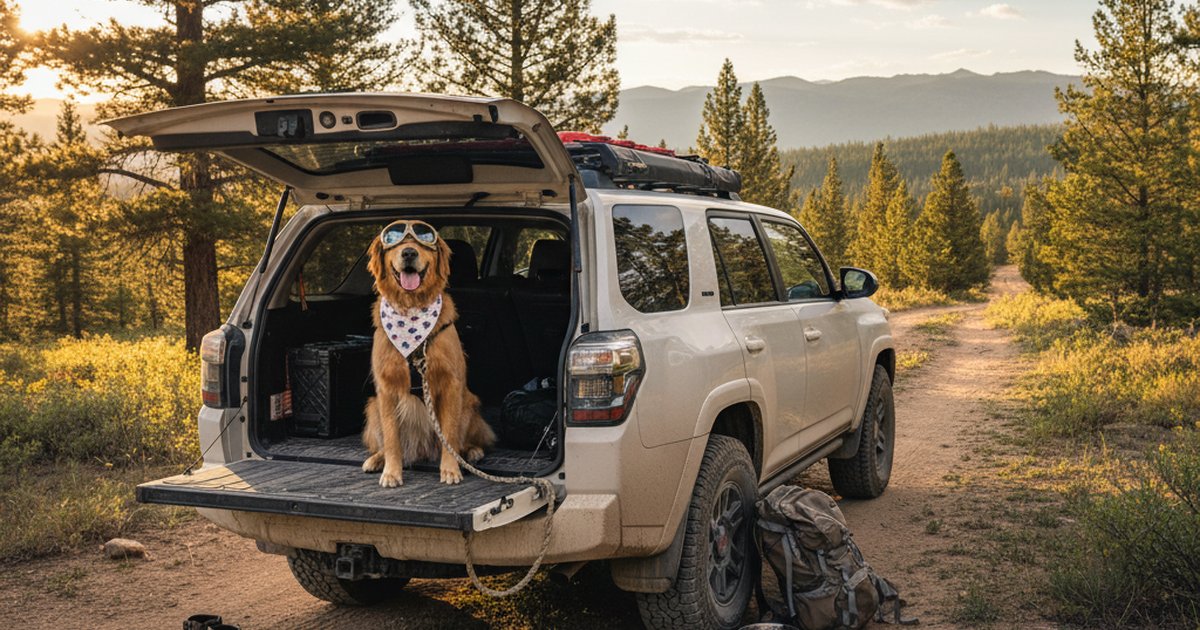
I know exactly who you are when you pull into my emergency clinic parking lot at 11:00 PM.
You drive a Toyota 4Runner. The back is covered in dog hair, mud, and maybe a few stray pine needles. You bought that specific rig because you wanted reliability, off-road capability, and most importantly, the perfect vehicle to take your dog on adventures. Your dog is your copilot. They live for the trails, the camping trips, and hanging their head out the roll-down rear window.
But right now, the back of your 4Runner smells like copper and fear. You’re carrying your 70-pound trail buddy through our double glass doors, your fleece jacket is soaked in blood, or your dog is screaming in pain every time they try to put weight on their back leg.
I’ve spent 15 years as a senior veterinary assistant in high-volume emergency hospitals. I love adventure dogs. But the harsh reality of taking your dog off-grid, up mountains, and over rocks is that accidents happen. And when they do, the medical bills are staggering.
The absolute worst part of my job isn’t the trauma or the blood. It’s the quiet, defeated look in an owner’s eyes when I hand them a $7,000 estimate to save their best friend, and they have to make the choice to put a perfectly fixable dog to sleep simply because they don’t have the cash. We call it “economic euthanasia,” and it shatters me every single time.
If you have the budget to build out a Toyota 4Runner for the trails, you need to have the budget to protect the dog riding in the back. Here is the dirty, medical truth about the injuries we see from off-road dogs, and why pet insurance is the single most important piece of recovery gear you can own.
The High-Tailgate Hazard: Blown Out Knees
The Toyota 4Runner sits high off the ground. If you’ve added a suspension lift and 33-inch all-terrain tires, it sits even higher.
Every time you open that tailgate and your dog launches themselves onto the hard pavement or rocky dirt, their knees take a massive impact. Eventually, the physics catch up with them. The most common orthopedic injury we see in the ER is a ruptured Cranial Cruciate Ligament (CCL)—the dog equivalent of a human ACL tear.
You’ll hear a sharp yelp, and suddenly your dog is “toe-touching,” refusing to put their foot flat on the ground.
The Medical Reality of a CCL Tear
A torn CCL does not heal with cage rest. The knee joint becomes entirely unstable. Every time the dog puts weight on the leg, their femur slides backward off their tibia, grinding the meniscus (the cartilage shock absorber) to shreds.
To fix this, we perform a TPLO (Tibial Plateau Leveling Osteotomy) surgery. It is a brutal, brilliant procedure. We literally cut the top of your dog’s shin bone off with a curved saw, rotate the bone to level out the slope of the knee, and screw a heavy-duty steel plate into the bone to hold it together.
This surgery costs between $4,500 and $7,000 depending on your location.
If you have a policy with Embrace or Pets Best, they cover 80% to 90% of this cost. You pay your $250 deductible, and the insurance company cuts a check for the rest. Instead of maxing out your credit cards or starting a GoFundMe, you get to focus entirely on carrying your dog in and out of the house for their eight-week recovery.
Vet Tech Tip: If you own a 4Runner, get a ramp. Train your dog to use it now. And get insurance before the knee blows, because once one knee tears, it’s considered a pre-existing condition, and many companies will refuse to cover the second knee when it inevitably tears a year later.
Deep Woods Trauma: Lacerations and Impalements
When your dog is blasting through heavy brush off-trail, they aren’t looking at what’s underfoot. We see dogs rushed in the back of 4Runners with horrifying lacerations from hidden barbed wire, sharp rocks, and broken branches acting like spears.
I recently triaged a German Shorthaired Pointer who had impaled his chest on a hidden tree branch while running through the woods. The branch missed his lungs by a fraction of an inch, but it ripped a pocket of skin and muscle wide open.
The Cost of Cleaning Up the Mess
Wounds from the woods are incredibly dirty. We can’t just stitch them shut; if we do, the bacteria from the trail will get trapped inside and cause a massive, life-threatening abscess.
First, we put the dog under heavy sedation. We spend an hour scrubbing the wound with chlorhexidine, surgically cutting away the dead, gray muscle tissue (debridement) so only healthy, bleeding tissue remains. We place rubber surgical drains deep into the wound so the infection can leak out, and then we staple the skin together.
This “minor” trail accident easily runs $1,200 to $2,500 in the ER.
Companies like Lemonade are fantastic for these sudden accidents. Their app-based claim system means you can literally upload the vet bill from the passenger seat of your 4Runner while we are waking your dog up from anesthesia, and often get reimbursed within days.
Wildlife Encounters: The $5,000 Snakebite
If you take your 4Runner out west, into the desert, or up into rocky foothills, you are playing in rattlesnake territory. Dogs investigate the world with their noses. That means 90% of the snakebites we see are right on the face, neck, or front paws.
A rattlesnake bite is a medical emergency that will drain your bank account faster than a blown transmission. The venom destroys red blood cells and causes tissue necrosis. The dog’s face will swell to twice its normal size, their airway can compromise, and the skin around the bite will literally turn black and slough off.
The Antivenin Bill
To save a snake-bitten dog, we have to administer antivenin. A single vial of antivenin costs the hospital a fortune to stock, which means it costs you anywhere from $800 to $1,500 per vial. A medium-to-large dog usually needs two to three vials to stabilize.
Add in two days of intensive care hospitalization, IV fluids, heavy pain narcotics like fentanyl, and blood transfusions, and a snakebite bill rapidly hits $5,000 to $8,000.
This is where Trupanion shines. Trupanion offers a feature called “Vet Direct Pay.” If our ER is set up with their software, we submit the invoice at checkout, and Trupanion pays the hospital directly within minutes. You only pay your portion (usually 10%). When you are three hours from home and staring at an $8,000 estimate, not having to front the cash is life-changing.
My Blunt Advice for Adventure Dog Owners
You didn’t buy a Toyota 4Runner to keep it parked in a suburban driveway, and you didn’t get a dog just to walk them around the block. You want to live an adventurous life together.
But you wouldn’t hit a black diamond trail without a full-size spare tire, a recovery strap, and a first aid kit. You prepare for the worst so you can enjoy the ride.
Pet insurance is your dog’s recovery gear.
Do not wait until your dog is limping in the back of the truck to look up policies. Insurance companies do not cover pre-existing conditions. If your dog comes into my ER with a torn knee or a snakebite and you buy a policy in the waiting room, it will cover absolutely nothing for that visit.
Get quotes from Nationwide, Trupanion, Embrace, or Pets Best today. Pick a high-deductible plan if you just want catastrophic coverage for the big ER bills. Lock it in while your dog is young and healthy.
I love seeing 4Runners pull into our parking lot because I know the dogs inside them live amazing lives. I just want to make sure that when the worst happens on the trail, I can take your dog into the back treatment room and get to work saving their life, without you ever having to worry about the cost. Protect your copilot. Get the insurance.
Frequently Asked Questions
Will pet insurance cover injuries if my dog gets hurt while we are off-roading or overlanding?
Yes. Unless you are using your dog for professional racing or guarding (which requires a specific working dog rider), standard pet insurance covers accidents that happen on the trail. Just make sure you go to a licensed emergency vet, even if it's two towns over from your campsite.
Does pet insurance cover tick-borne diseases we pick up on the trail?
Yes, as long as you didn't see symptoms before your policy's waiting period ended. Lyme disease, Anaplasmosis, and Rocky Mountain Spotted Fever are fully covered by providers like Trupanion and Lemonade. Keep up with your preventative meds, though—treating a tick disease is miserable for your dog.
My dog jumped out of my lifted 4Runner and is limping. Should I wait to see if it heals?
Please don't wait. A sudden limp after a hard drop from a tailgate is a classic CCL (ACL) tear. It will not heal on its own. The longer you wait, the more arthritis builds up, and the higher the chance they will blow out their other knee overcompensating. Get to the vet.