Disclosure: This post contains affiliate links. We may earn a commission at no extra cost to you. Our research is independent and unbiased.
Editorial Note: Cost data in this article is sourced from published veterinary industry reports (NAPHIA, AVMA, VPI). This is an informational resource — not veterinary or financial advice. For health concerns, consult a licensed veterinarian.
Scottish Fold Insurance WARNING: Osteochondrodysplasia Risks
Scottish Folds develop osteochondrodysplasia — a painful joint disease affecting all cats with folded ears. 2026 lifetime treatment cost breakdown.

Pet Insurance Guide Research Team
Independent Analysts
Consumer Warning
Research shows that the physical features making certain cat breeds popular can carry significant health and welfare implications. Specifically, the characteristic folded ears of the Scottish Fold cat breed are the result of a genetic mutation affecting cartilage development. This mutation does not selectively target the ears; rather, it affects cartilage throughout the entire skeletal system, leading to a condition known as osteochondrodysplasia. Veterinary experts and published cost data indicate that caring for a Scottish Fold involves substantial, lifelong medical expenses due to the progressive nature of this disorder.
The Condition: Osteochondrodysplasia
Osteochondrodysplasia is a developmental abnormality of bone and cartilage. In Scottish Folds, the genetic mutation causing the folded ear is inherited in an autosomal dominant pattern. Research shows that all cats with folded ears—whether heterozygous or homozygous—develop osteochondrodysplasia to varying degrees. Feline orthopedic studies indicate that homozygous cats develop a more severe and rapidly progressive form of the disease, showing clinical signs within the first few months of life. Heterozygous cats also develop progressive osteoarthritis, though the onset is typically more gradual.
Pathology and Physiological Impact
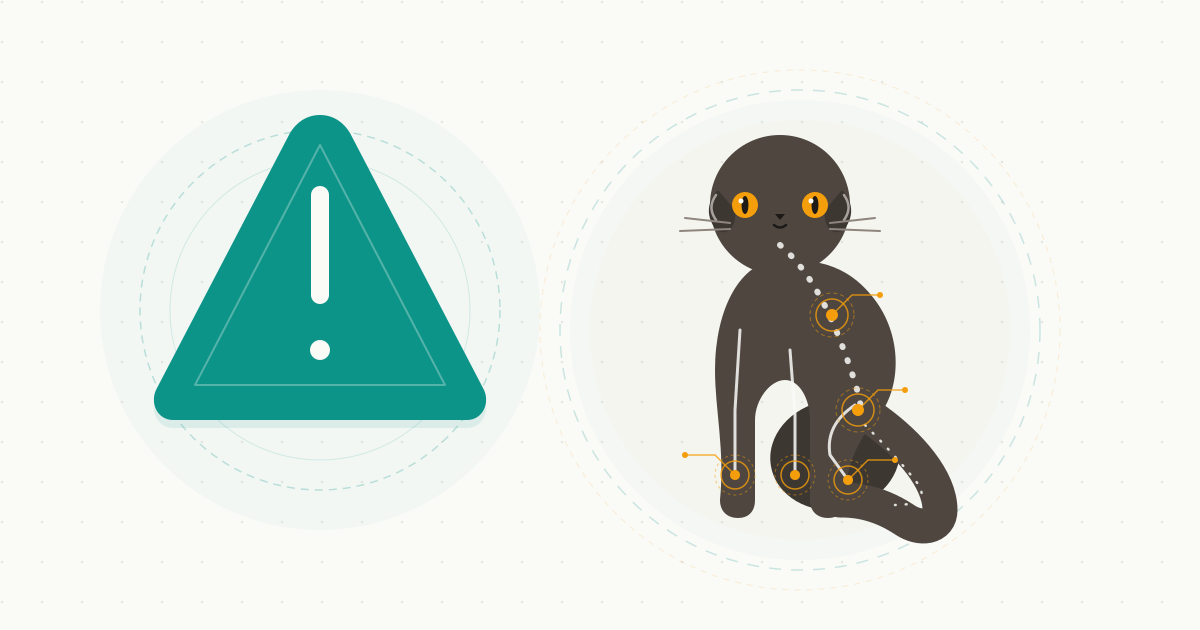
Cartilage serves as a protective cushion between joints. In Scottish Folds, the cartilage matrix is structurally defective, causing rapid degradation. This leads to bone-on-bone friction, chronic inflammation, and painful bony growths (osteophytes) around the joints. Feline veterinary specialists report that this skeletal degeneration primarily affects the distal limbs, the carpal (wrist) and tarsal (ankle) joints, and the tail vertebrae.
Clinical Signs and Progression
Veterinary reports document key physical and behavioral indicators of this condition:
- Altered Gait: Stiff, stilted movement, and gingerly walking to minimize joint pain.
- Skeletal Deformities: Shortened, misshapen limbs and an abnormally short, thick, and inflexible tail due to caudal vertebrae fusion.
- Reluctance to Move: Hesitation to jump onto raised surfaces, climb stairs, or play.
- Behavioral Changes: Lethargy, social withdrawal, or touch-sensitivity.
These degenerative changes are irreversible and progressive. Felines often show signs of joint pain and osteoarthritis as early as six months of age. Similarly to how avian veterinarians report on skeletal cartilage anomalies in avian species, feline specialists document that all Scottish Folds suffer from osteochondrodysplasia, requiring lifelong management.
Medical and Therapeutic Interventions
Managing osteochondrodysplasia requires a multimodal approach focused on pain mitigation and joint support.
Pharmacological Options
Veterinary specialists frequently prescribe these therapies:
- Monoclonal Antibody Therapy: Frunevetmab is an FDA-approved monthly injection targeting Nerve Growth Factor to alleviate osteoarthritis pain. Published cost data indicates that this treatment costs approximately $80 to $100 per month.
- Anti-Inflammatory Medications: Non-steroidal anti-inflammatory drugs (NSAIDs) control inflammation, though long-term use requires regular liver and kidney monitoring.
- Neuropathic Pain Relief: Gabapentin manages chronic nerve pain and improves comfort.
Advanced Therapies
For advanced cases, additional interventions include:
- Palliative Radiation Therapy: Targeted low-dose radiation can reduce joint inflammation and bone spur discomfort. Published cost data indicates this procedure typically costs upwards of $1,000.
- Surgical Fusion: Arthrodesis (joint fusion) may eliminate localized movement-induced pain, though it does not cure the systemic skeletal defect.
Supportive and Environmental Care
Supporting an affected cat involves adjusting the home environment to minimize physical stress:
- Environmental Modifications: Providing ramps or steps to access furniture, low-sided litter boxes, and orthopedic heated beds helps accommodate reduced mobility.
- Nutritional Support: Diets enriched with omega-3 fatty acids, glucosamine, and chondroitin sulfate are recommended to support remaining joint structures.
The Insurance Minefield
Securing pet insurance is essential yet challenging due to the certainty of cartilage degeneration.
Pre-Existing Conditions and Exclusions
Pet insurance policies exclude pre-existing conditions—any illness or injury displaying clinical signs before coverage begins. If a veterinarian notes joint stiffness, limping, or a shortened tail prior to enrollment, all future treatments for osteochondrodysplasia and arthritis will be excluded. Additionally, some providers classify osteochondrodysplasia as a breed-specific exclusion, refusing coverage entirely.
Coverage Strategies
To optimize coverage, policies must explicitly cover hereditary and congenital conditions. Specialized exotic pet insurance can help offset these costs — coverage availability varies significantly by species. Enrolling a kitten at eight weeks of age is critical to prevent pre-existing condition exclusions before joint issues arise.
Ethics and Breeding Practices
The breeding of Scottish Folds is a subject of significant ethical debate within the international veterinary community.
Veterinary Advocacy
Major veterinary organizations advocate against the breeding of cats with folded ears. These organizations argue that intentionally breeding animals with a known genetic defect that causes chronic, painful skeletal disease is a welfare concern. In some countries, regulations restrict or ban the breeding of Scottish Folds.
Alternative Options
For individuals drawn to the temperament and appearance of the breed, feline organizations recommend considering the Scottish Straight. These cats, which come from the same litters but do not inherit the mutated ear-folding gene, have normal upright ears. Feline veterinary specialists report that Scottish Straights do not develop the systemic osteochondrodysplasia associated with the folded ear gene, representing a healthier and more ethically sustainable alternative.
Frequently Asked Questions
Can surgery cure osteochondrodysplasia in Scottish Folds?
No surgical procedure can cure this condition. Because the genetic mutation affects the cartilage matrix throughout the entire skeletal system, surgery cannot replace or repair the defective tissue. Medical interventions are limited to lifelong pain management, environmental modifications, and supportive care.
How much does monthly pain management cost?
Published cost data indicates that monthly pain management expenses vary based on the cat’s size and the chosen therapies. Monoclonal antibody injections typically cost between $80 and $100 per month. Additional medications, such as gabapentin, along with required regular veterinary monitoring and diagnostic blood work, can add $30 to $50 to monthly expenses. Over the lifespan of the cat, cumulative costs can reach several thousand dollars.
Does pet insurance cover hereditary skeletal disorders?
Coverage depends entirely on the specific policy terms and the timing of enrollment. Policies must explicitly include coverage for hereditary and congenital conditions. Specialized exotic pet insurance can help offset these costs — coverage availability varies significantly by species. If a cat is enrolled before any signs of joint stiffness or skeletal abnormalities are documented, the treatment may be covered, provided the insurer does not implement a breed-specific exclusion for Scottish Folds.
Data Sources
- NAPHIA Annual Report
- AVMA Pet Industry Statistics
- Exotic animal veterinary cost surveys
Frequently Asked Questions
Does insurance cover Scottish Fold arthritis?
">-" Honestly, it's a minefield. Because Osteochondrodysplasia is hardwired into their DNA, a lot of insurance companies will flat-out deny claims, calling it a breed-specific exclusion. You have to read the fine print before you sign up.
Are they in pain?
">-" Yes, and it breaks my heart. That same gene that makes their ears look cute destroys the cartilage in their joints. I see these sweet cats coming in at just six months old, stiff, limping, and hurting every time they try to jump onto a couch.
What is the best insurance for them?
Policies that explicitly cover hereditary and congenital conditions are essential for Scottish Folds. Enroll as a kitten immediately — any documented joint stiffness or lameness before enrollment will typically be excluded as a pre-existing condition.