
Disclosure: This post contains affiliate links. We may earn a commission at no extra cost to you. Our research is independent and unbiased.
Editorial Note: This article was researched with AI assistance and reviewed by licensed veterinary and insurance professionals before publication.
The Midnight ER Run: What Happens When Pets Meet Lysol Disinfecting Sprays
A 2 AM ER trip for Lysol poisoning is a nightmare I see too often. Here is what happens when pets ingest household disinfectants and how to protect them.

Alex Carter
Veterinary Medicine Expert
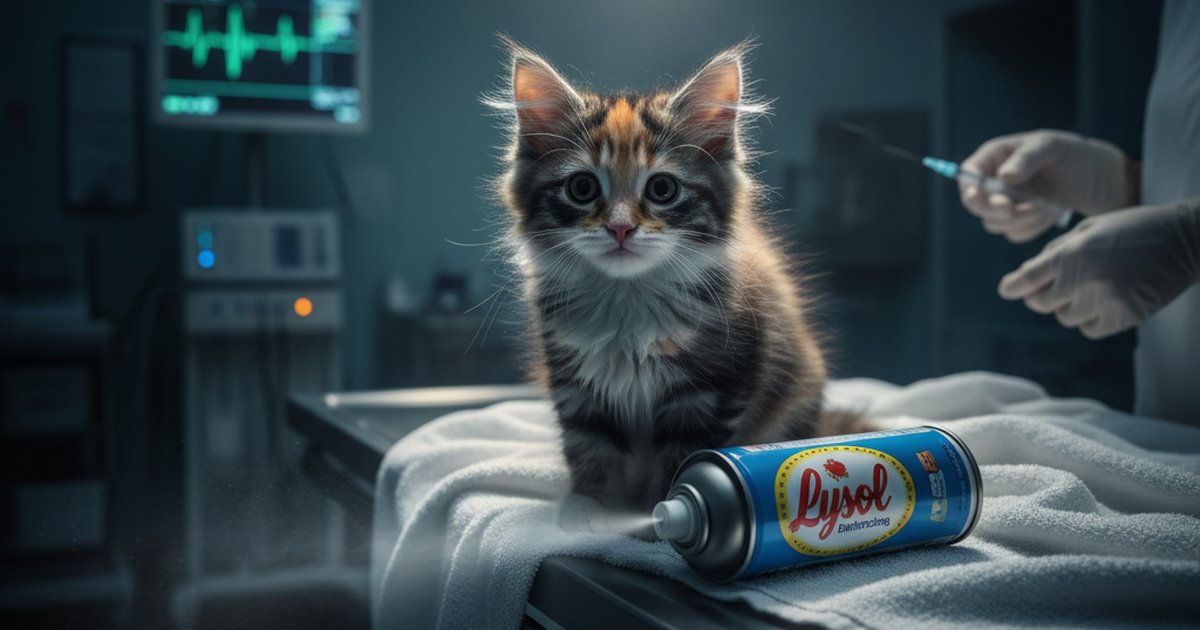
In the emergency veterinary hospital, you learn to identify a crisis by smell before you even lay eyes on the patient. Blood has a metallic tang. Parvo has a distinct, sickeningly sweet odor. But one of the smells that always makes my stomach drop as a vet tech is the sharp, chemical scent of household cleaners mixed with dog vomit or cat saliva.
Last week, a frantic owner rushed in at 2:00 AM carrying a limp, drooling tabby cat named Jasper. The owner was sobbing, wearing pajamas that smelled strongly of crisp linen and lemon. She had just been doing some late-night spring cleaning, spraying the bathroom floor with Lysol disinfecting spray. Jasper had wandered in, walked across the wet tiles, and then sat in the hallway to meticulously groom his paws.
Within an hour, Jasper was foaming at the mouth, vocalizing in pain, and experiencing neurological tremors. His owner wasn’t negligent; she was just trying to keep her house clean. But that innocent mistake landed her in triage, facing a critically ill cat and a massive medical bill.
If you use Lysol disinfecting sprays—or any heavy-duty chemical cleaners—you need to know exactly what they do to your pet’s body, what it takes to save them, and why having a financial safety net is the only way to avoid making an impossible choice at the front desk.
The Dirty Details of Chemical Toxicity
Lysol and similar household disinfectants are highly effective at killing bacteria and viruses because they contain powerful active ingredients. The most common culprits are benzalkonium chloride, ethanol, and various phenols.
While a quick spray might sanitize your countertops, these chemicals are highly corrosive to the delicate tissues inside a pet’s mouth, throat, and stomach.
Why Cats Are in the Most Danger
Cats are uniquely vulnerable to phenols. A cat’s liver lacks a specific enzyme (glucuronyl transferase) required to break down and process phenolic compounds. When a dog ingests a small amount of phenol, their liver can usually filter it out, though they might still suffer chemical burns. When a cat ingests it, the toxin builds up rapidly in their bloodstream, leading to acute liver failure, kidney damage, and severe neurological issues like seizures.
The Aerosol Threat to Birds
If you own a bird, aerosolized disinfecting sprays are an absolute death sentence. Birds have highly efficient respiratory systems with sensitive air sacs that absorb oxygen—and airborne toxins—at a massive rate. Spraying Lysol in the same room as a parrot or cockatiel can cause fatal respiratory distress in minutes.
The ER Protocol: What We Do and What It Costs
When you rush a poisoned pet through our doors, the clock is ticking. We don’t have time to wait and see if they “sleep it off.” Here is exactly what happens in the back treatment room, and the harsh reality of what it costs.
1. Triage and Stabilization ($150 - $300)
First, we assess the airway and vitals. If the pet is seizing or having tremors, we immediately place an IV catheter and push anti-convulsant medications like Diazepam or Midazolam. If they are struggling to breathe due to chemical inhalation, we place them in an oxygen cage.
2. Bloodwork and Diagnostics ($250 - $400)
We need to know what the internal organs are doing right now. We run a complete blood count (CBC) and a comprehensive chemistry panel to check liver enzymes and kidney function. If those numbers are spiking, we know the organs are actively failing.
3. Flushing the System ($800 - $2,000+)
There is no magical antidote for household cleaner toxicity. The treatment is aggressive, continuous supportive care. We hook the pet up to intravenous fluids to flush the kidneys and support blood pressure. We administer heavy-duty anti-nausea medications (like Cerenia) and gastric protectants (like Sucralfate) to coat the chemical burns in their esophagus and stomach.
A pet like Jasper usually requires 48 to 72 hours of round-the-clock hospitalization, constant monitoring, and repeat bloodwork to ensure his liver is recovering.
The Total Bill: A moderate to severe case of Lysol toxicity will easily run between $1,500 and $3,500. If the pet requires a ventilator or extended ICU time, that number can double.
The Heartbreak of the Estimate
As a senior veterinary assistant, my least favorite part of the job isn’t the blood, the bites, or the chaotic night shifts. It’s walking into an exam room with a printed estimate on a clipboard.
I watch owners scan the itemized list of IV fluids, blood panels, and hospitalization fees. I see the exact moment the panic shifts from their pet’s health to their bank account. They start asking questions born out of desperation: “Can we just give him fluids under the skin and take him home?” or “What if we just wait until morning?”
With severe chemical burns and organ failure, taking them home is a death sentence. This is where “economic euthanasia” happens. It is the soul-crushing reality of an owner having to put their beloved animal to sleep simply because they do not have $3,000 sitting in their checking account. It breaks the owners, and frankly, it breaks the veterinary staff, too.
How Pet Insurance Changes the Conversation
You never plan on your dog chewing up a plastic bottle of cleaner, or your cat licking a wet floor. That is exactly why pet insurance exists.
Accidental toxin ingestion is covered by virtually every major pet insurance provider on the market. If you have a policy with companies like Trupanion, Lemonade, Pets Best, Nationwide, or Embrace, a chemical poisoning is classified as an unexpected accident.
Here is how the 2 AM ER trip goes when you have insurance:
- I hand you the $3,000 estimate to save your cat.
- You know you have a $250 deductible and a 90% reimbursement rate.
- You hand the clipboard back to me and say, “Do whatever it takes to save him.”
You get your best friend back, and a few weeks later, your insurance company deposits $2,475 back into your account. You don’t have to drain your savings, max out a high-interest credit card, or say a premature goodbye. It buys you peace of mind, and it allows my team to practice the gold-standard medicine your pet deserves.
Just remember: you cannot buy car insurance after you’ve crashed the car. Pet insurance companies will not cover an accident if you buy the policy from the ER waiting room. You have to secure coverage while your pet is healthy, before the unthinkable happens.
Safe Cleaning Rules from the ER
I am not telling you to live in a dirty house. We all need to disinfect our bathrooms and kitchens. But you must change how you clean when you share your home with animals.
- Evacuate the Room: Before you spray any chemical disinfectant, physically remove your pets from the room and close the door.
- The Bone-Dry Rule: Never let a pet back into a treated area until the surface is completely, 100% dry to the touch. If it is wet, it can transfer to their paws, and they will lick it off.
- Ventilate: Open a window or turn on an exhaust fan. The fumes alone can cause severe upper respiratory irritation, especially in cats and flat-faced dogs like Pugs or French Bulldogs.
- Store Securely: Keep all cleaning bottles behind child-proof locks. A bored Golden Retriever will happily chew through a plastic spray bottle just to see what’s inside.
- Consider Pet-Safe Alternatives: For daily wipe-downs, look into enzyme cleaners or veterinary-approved disinfectants (like Rescue) that are specifically formulated to be safe around animals once dry.
Accidents happen to the best, most attentive pet owners. We see it every single day. Protect your home by cleaning smarter, and protect your wallet—and your pet’s life—by getting them insured. When the worst happens, you want to be focused on your pet’s recovery, not the price tag attached to their life.
Frequently Asked Questions
My dog just licked a floor I sprayed with Lysol. What do I do?
Don't panic, but act fast. Wipe their mouth out with a damp cloth to remove any unswallowed chemicals. If they only took one lick of a mostly dry floor, they might just get an upset stomach. If they licked a wet puddle, call Pet Poison Helpline immediately and head to the ER. Do not induce vomiting—bringing chemicals back up burns the esophagus twice.
Will pet insurance cover the vet bill if I was the one who sprayed the cleaner?
Yes. Pet insurance companies know accidents happen. Whether your cat walked on a wet counter or your dog chewed right through the plastic Lysol bottle, providers like Embrace and Lemonade cover accidental toxin ingestion as long as your policy's waiting period has passed.
How long after spraying Lysol is it safe for my pets to be in the room?
The golden rule in the clinic is: if you can still smell it, or if the surface is even slightly damp, it's not safe. Keep pets out of the room until the area is bone dry and well-ventilated. For aerosol sprays, wait at least 30 minutes to an hour before letting them back in.