Disclosure: This post contains affiliate links. We may earn a commission at no extra cost to you. Our research is independent and unbiased.
Editorial Note: This article was researched with AI assistance and reviewed by licensed veterinary and insurance professionals before publication.
The Tuesday Night Trauma: Why Cooking Pasta Could Cost You $4,000 at the Vet
You just wanted a quick dinner. Now you're at the ER vet. A 15-year vet tech explains kitchen hazards and why pet insurance is your only safety net.

Alex Carter
Veterinary Medicine Expert
You probably landed here because you typed “how to cook pasta” into your search bar. You just wanted a quick, easy weeknight dinner. Boil water, drop in the noodles, heat up some sauce, and feed yourself after a long day.
But as a senior veterinary assistant who has spent 15 years working the floor in high-volume emergency animal hospitals, let me tell you what that simple search means to me. To me, “cooking pasta” is the exact scenario that precedes the frantic, panicked pounding on our clinic’s glass doors at 8:30 PM.
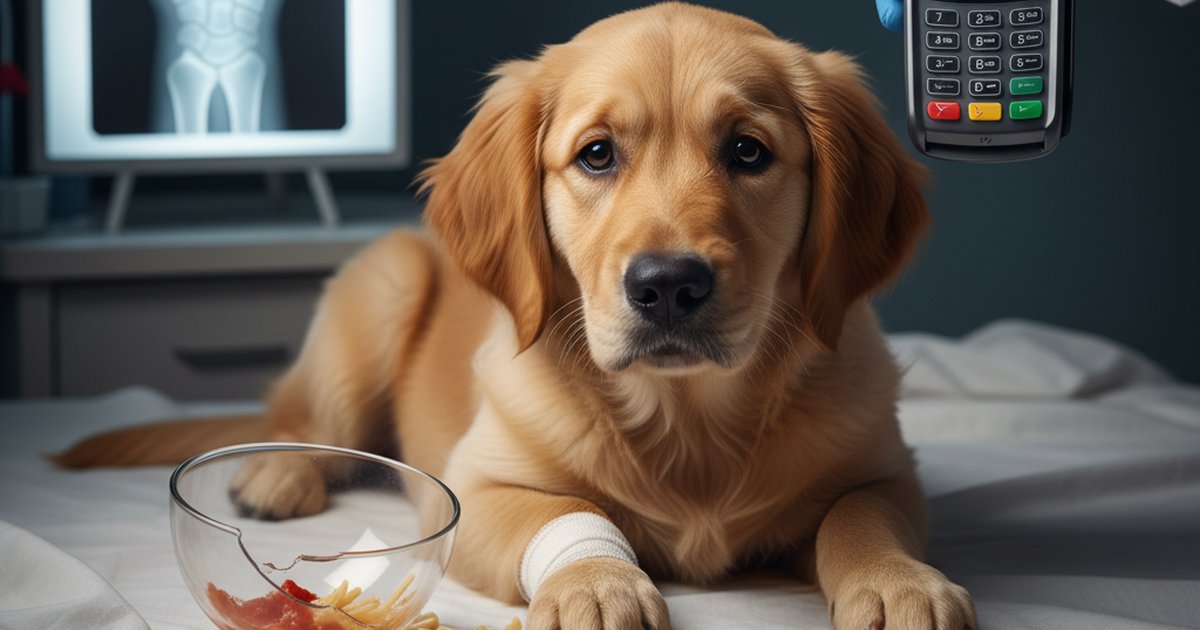
You turned your back for ten seconds to drain the spaghetti. In that tiny window, your Golden Retriever counter-surfed. Maybe they pulled the boiling pot off the stove. Maybe they inhaled the entire pan of garlic-heavy marinara sauce you left cooling on the island.
Now, your kitchen is a disaster, your dog is screaming or vomiting, and you are rushing into my lobby in a pasta-stained apron. You are about to face a medical nightmare, and if you don’t have pet insurance, you are about to face a devastating financial one, too.
The Anatomy of a Kitchen ER Visit
People think the kitchen is safe. It isn’t. When a mundane cooking task goes wrong with a pet underfoot, the injuries are catastrophic. I have held crying owners in our consultation rooms while we go over estimates that completely drain their savings. Let’s break down exactly what happens in the back room while you are pacing in the lobby.
Scenario 1: The Boiling Water Burn
Dogs have zero concept of thermal danger until it’s too late. When a dog pulls a pot of boiling pasta water onto themselves, the water soaks directly into their fur, holding the scalding heat against their skin.
When you bring a burned dog to my treatment area, the smell of singed hair and cooking flesh is something you never forget. We have to heavily sedate them immediately with IV fentanyl or methadone. Then comes the debridement. We aren’t just cleaning a wound; we are physically scrubbing away dead, sloughing skin and tissue to prevent sepsis. We apply silver sulfadiazine cream, wrap them in sterile bandages, and start aggressive IV fluids because severe burns cause massive fluid loss.
The Bill: Burn management requires days in the ICU, daily sedated bandage changes, and heavy-duty antibiotics. You are looking at a minimum of $2,500, easily scaling up to $6,000+ if skin grafting is required.
Scenario 2: The Garlic and Onion Sauce Toxicity
Let’s say they missed the water but ate the pasta sauce. Garlic and onions belong to the Allium family. They are highly toxic to dogs and cats.
When a dog eats garlic, the toxins oxidize their red blood cells. The cells become fragile and literally pop in the bloodstream—a condition called Heinz body anemia. Your dog starts suffocating from the inside because they no longer have the red blood cells to carry oxygen to their organs. Their gums turn stark white or muddy brown. Their urine looks like port wine from the dead blood cells being filtered through the kidneys.
If you get them to me within an hour, I can give them an injection of apomorphine to make them vomit the pasta up. That’s a $300-$500 visit. If you waited because you thought “it was just a little sauce,” we are looking at hospitalization, oxygen therapy, and a packed red blood cell (pRBC) transfusion.
The Bill: A single unit of canine blood costs us hundreds of dollars to source. With the transfusion, oxygen support, and hospitalization, this bill hits $2,000 to $4,500 fast.
The Heartbreak of the Estimate
This brings us to the hardest part of my job. I am usually the one who has to print out the treatment plan, walk into Room 3, and show you the numbers.
I watch people’s faces drop. I watch them frantically check their banking apps. I watch them apply for CareCredit on their phones, only to be denied. And then, I have to watch them make the worst decision of their lives: “economic euthanasia.” Putting an otherwise healthy, deeply loved dog to sleep simply because the owner doesn’t have $4,000 in liquid cash on a random Tuesday night.
It shatters me every single time. It never gets easier. We bag up their collars, hand you the clay paw print, and you go home to a kitchen that still smells like the dinner you were trying to make.
Why Pet Insurance is Your Only Safety Net
You cannot predict when your dog is going to do something incredibly stupid. But you can protect yourself from the financial fallout. Pet insurance is the difference between saying, “Do whatever it takes to save him,” and asking me, “What is the bare minimum we can do to keep him comfortable?”
If you have a solid policy, you never have to choose between your wallet and your best friend.
How the Big Providers Handle the ER
Not all insurance is created equal. When you are standing in my ER at midnight, here is how the major players actually perform in the real world:
- Trupanion: This is the gold standard for emergency vets. Trupanion has software that integrates directly with our hospital systems. If your bill is $5,000 and you have a 90% coverage plan, I submit the claim at the front desk, and within five minutes, Trupanion pays us their portion directly. You only swipe your card for your deductible and the remaining 10%. It is a literal lifesaver.
- Lemonade: If you have to pay upfront, Lemonade is fantastic for fast reimbursement. I’ve had clients pay a $3,000 toxicity bill on their credit card, file the claim on the Lemonade app from the parking lot, and have the funds wired to their checking account before the credit card bill even posts.
- Embrace: Excellent for accident and illness coverage. They also offer a diminishing deductible, meaning if you go a few years without a kitchen disaster, your deductible drops, saving you money when the big emergency finally happens.
- Pets Best & Nationwide: Both offer robust, reliable coverage for these exact types of accidents. Nationwide is especially good if you have exotic pets (like a parrot that flew into the hot stove), while Pets Best offers unlimited annual payout options, which is vital if your pet needs two weeks in the ICU for severe thermal burns.
Stop Reading and Protect Them
I love animals, and I love my job, but I never want to see you in my ER. I never want to smell burnt fur or clean up toxic garlic vomit from your Golden Retriever.
But if I do see you, I want you to be armed with pet insurance. Policies usually cost between $30 to $60 a month. That is roughly the cost of ordering takeout twice.
So, go ahead and finish making your dinner. Boil the water. Drain the pasta. But while you are waiting for that sauce to simmer, pull out your phone and get a quote from Trupanion, Lemonade, or Embrace. Lock in your policy.
Do it tonight. Because you never know what’s going to happen the next time you step away from the stove.
Frequently Asked Questions
Is plain cooked pasta safe for my dog to eat?
Plain, unseasoned pasta isn't toxic, but it's just empty carbs. A dropped noodle won't kill them. The problem is what's ON the pasta—garlic, onions, heavy fats—or the boiling water used to make it. If they eat a plain noodle, they'll be fine. If they eat the sauce, call the ER.
My dog ate pasta sauce with garlic. Do I really need to go to the vet right now?
Yes. Garlic and onions cause Heinz body anemia, which destroys red blood cells. By the time your dog looks lethargic or has pale gums, they are already suffocating from the inside out. Get in the car. We need to induce vomiting before it digests.
Does pet insurance cover kitchen accidents like burns or toxicity?
Yes, standard accident and illness policies cover these emergencies, provided the incident happened after your waiting period. If you have Lemonade, Trupanion, or Embrace active before the accident, they will cover the diagnostics, hospitalization, and treatments.