Disclosure: This post contains affiliate links. We may earn a commission at no extra cost to you. Our research is independent and unbiased.
Editorial Note: Cost data in this article is sourced from published veterinary industry reports (NAPHIA, AVMA, VPI). This is an informational resource — not veterinary or financial advice. For health concerns, consult a licensed veterinarian.
Bloat (GDV) Surgery Cost: The 1-Hour Deadline: 2026 Breakdown
GDV (bloat) surgery costs $4,000–$8,000 and must happen within hours. 2026 breakdown of emergency costs, gastropexy prevention pricing, and what to expect.

Pet Insurance Guide Research Team
Independent Analysts
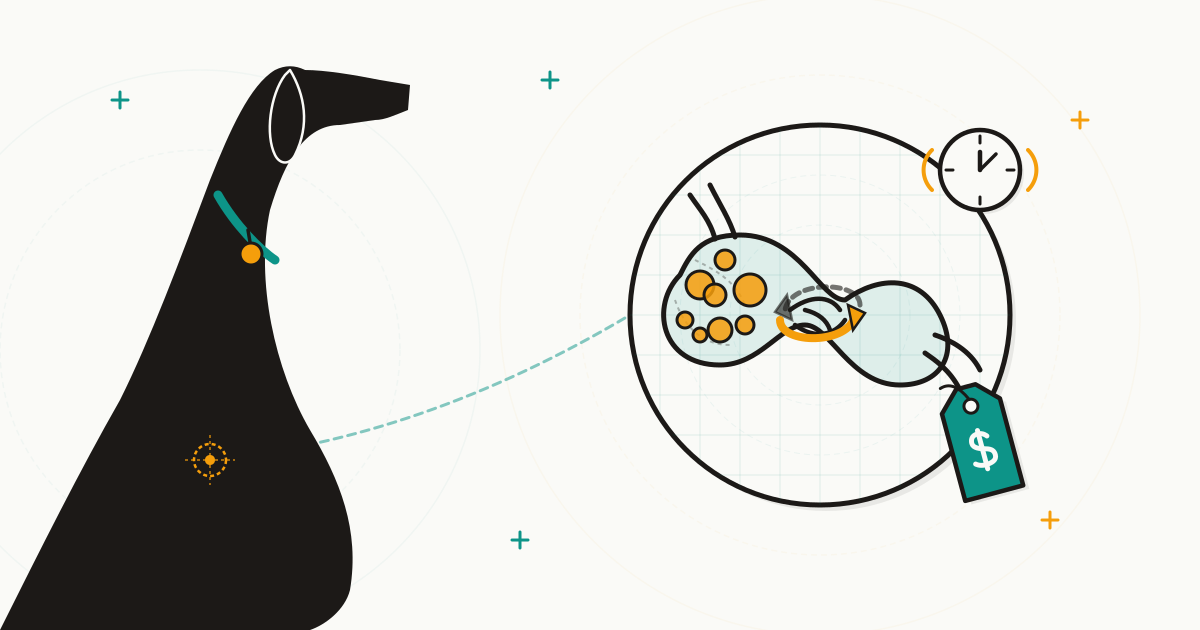
Gastric Dilatation-Volvulus (GDV), commonly referred to as bloat, is a life-threatening veterinary emergency that requires immediate surgical intervention. The condition begins when a dog’s stomach distends with gas, food, or fluid (dilatation). In many cases, the distended stomach then rotates along its longitudinal axis (volvulus). This rotation twists both the entry point from the esophagus and the exit point to the intestines, effectively trapping gas and gastric contents. As the stomach continues to expand, it cuts off the blood supply to the stomach wall and major blood vessels in the abdomen, including the portal vein and the caudal vena cava. This reduction in venous return to the heart quickly leads to systemic shock, tissue necrosis, cardiac arrhythmias, and organ failure. Without prompt surgical correction, GDV is invariably fatal.
The 1-Hour Emergency Window
The window for successful treatment of GDV is extremely narrow, often referred to as the one-hour emergency window. The progression from mild stomach distension to severe shock can occur in under sixty minutes, making swift action critical.
Large, deep-chested dog breeds are at the highest risk. Breeds such as Great Danes, Standard Poodles, German Shepherds, Weimaraners, Irish Setters, and Saint Bernards are anatomically predisposed due to their deep chest cavities, which allow the stomach room to rotate.
Owners of these breeds must recognize early warning signs, which include:
- Unproductive heaving or attempts to vomit.
- Excessive drooling or salivation.
- A distended, hard, or swollen abdomen.
- Restlessness, pacing, and distress.
- Rapid or shallow breathing.
- Pale gums and collapse.
If any of these signs occur, the dog requires immediate transport to an emergency clinic. Delaying treatment increases the likelihood of gastric wall necrosis, toxemia, and cardiovascular shock.
Cost Breakdown
Treating GDV involves a sequence of emergency medical procedures. The overall cost varies depending on the severity of the twist, whether tissue necrosis has occurred, and the clinic’s location. Below is a detailed breakdown of treatment stages and their cost ranges.
| Treatment Stage | Cost Range | What It Involves |
|---|---|---|
| Stabilization | $500–$1,000 | Intravenous fluids to combat shock, pain management, gastric decompression via tube or trocar, and diagnostic imaging. |
| GDV Surgery | $2,500–$5,000 | General anesthesia, laparotomy, untwisting the stomach, assessing tissue viability, performing a gastropexy, and closure. |
| Splenectomy if needed | +$1,000 | Surgical removal of the spleen if the blood vessels were compromised or the organ suffered severe tissue damage. |
| ICU Post-Op | $1,500–$3,000 | Continuous ECG monitoring for arrhythmias, intensive pain management, IV fluids, and nursing care for 48 to 72 hours. |
| Total | $4,500–$10,000 | The combined estimated cost for stabilization, surgery, postoperative care, and essential medications. |
Initial stabilization focuses on restoring blood pressure and decompressing the stomach to relieve pressure on internal organs. During surgery, the veterinarian untwists the stomach and assesses tissue viability. If gastric wall necrosis has occurred, a partial gastrectomy is performed, increasing surgical complexity. Because the spleen often rotates with the stomach, a splenectomy may be necessary if its blood vessels are damaged. Post-operative ICU care is critical; reperfusion can release toxins that trigger life-threatening cardiac arrhythmias, necessitating continuous ECG monitoring.
Preventive Gastropexy
For breeds predisposed to GDV, a preventive or prophylactic gastropexy is highly recommended. This surgical procedure permanently attaches the stomach wall to the right abdominal wall, preventing rotation even if the stomach becomes distended with gas.
- Cost: A prophylactic gastropexy typically costs between $500 and $1,200.
- Timing: This procedure is most cost-effective and safest when performed concurrently with routine spay or neuter surgeries, as the dog is already under general anesthesia.
- Efficacy: A preventive gastropexy provides a 95% reduction in the risk of stomach rotation. While the dog can still experience bloating (gas accumulation), the life-threatening volvulus (twist) is prevented.
- Insurance Considerations: Most standard pet insurance accident and illness policies do not cover elective preventive surgeries. However, paying for the preventive surgery out-of-pocket is significantly less expensive than emergency treatment.
Financial Planning
GDV strikes without warning and progresses with extreme rapidity. Because treatment requires immediate, costly emergency care, financial preparation is critical for owners of deep-chested breeds. Pet insurance is an effective way to manage the financial risk of GDV. When choosing a policy, owners should ensure that the plan covers emergency surgical procedures and does not exclude breed-specific conditions. It is vital to verify the specific terms of coverage, including deductible structures, reimbursement percentages, and waiting periods, to guarantee that emergency surgical interventions are fully covered when needed.
Data Sources
The cost ranges and medical facts presented in this guide are compiled from the following professional and industry resources:
- North American Pet Health Insurance Association (NAPHIA) Annual Report.
- American Veterinary Medical Association (AVMA) Pet Industry Statistics.
- Published veterinary emergency surgery cost surveys and clinical studies.
Frequently Asked Questions
What are the signs of Bloat (GDV)?
They'll pace, drool buckets, and look at their belly. The biggest giveaway? Trying to throw up but nothing comes out. Their stomach feels tight like a drum. Do not wait to see if it passes. It won't. Get to the ER now.
How much does Bloat surgery cost?
You're looking at a $4,000 to $8,000 bill, usually handed to you at 2 AM. That covers IV fluids to keep them from crashing, opening them up to physically untwist the stomach, and days in the ICU.
Is Gastropexy (Stomach Tacking) worth it?
100% yes. If you have a deep-chested dog, tack their stomach when they get spayed or neutered. It costs a few hundred bucks up front and stops the stomach from twisting. It's the best money you'll ever spend.