Disclosure: This post contains affiliate links. We may earn a commission at no extra cost to you. Our research is independent and unbiased.
Editorial Note: Cost data in this article is sourced from published veterinary industry reports (NAPHIA, AVMA, VPI). This is an informational resource — not veterinary or financial advice. For health concerns, consult a licensed veterinarian.
Feline Asthma Treatment Cost 2026: Inhalers & Insurance
Feline asthma treatment costs are high due to lifelong inhalers. Here is the truth on 2026 costs and why pet insurance is your best financial safet...

Pet Insurance Guide Research Team
Independent Analysts
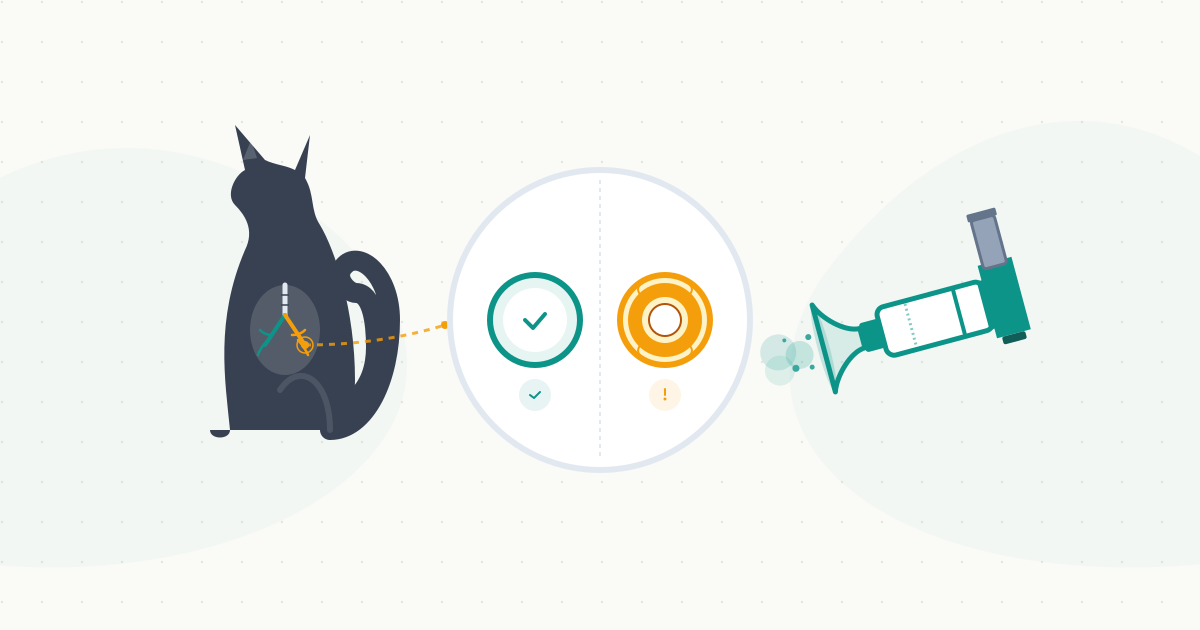
Feline asthma is a chronic respiratory condition characterized by airway inflammation, mucus accumulation, and bronchial spasms. When a cat experiences an asthma flare-up, the clinical symptoms can be highly alarming. Typically, the animal hunches its body close to the ground, extends its neck forward, and exhibits rapid, shallow breathing or coughing. This presentation is frequently mistaken by pet owners for an attempt to expel a hairball. However, unlike a hairball episode, nothing is produced, and the coughing fits recur over time.
Veterinary research notes that feline asthma affects a significant percentage of the domestic cat population, with severity ranging from mild, occasional coughing to acute, life-threatening airway constriction. Early diagnosis and consistent medical management are critical for maintaining a cat’s quality of life and preventing irreversible lung damage.
The Cost of Diagnosis and Stabilization
Diagnosing feline asthma requires distinguishing it from other conditions with similar symptoms, such as heart failure, lungworms, or infectious pneumonia. Because cats in acute respiratory distress require immediate stabilization, initial costs can escalate quickly.
Diagnostic Testing
Determining whether a cat has asthma typically involves a series of diagnostic steps:
- Chest X-rays (Radiographs): $250. This imaging is necessary to look for hyperinflated lungs and specific bronchial patterns (often referred to as “doughnuts” or “tramlines” in veterinary medicine), which indicate thickened, inflamed airway walls.
- Complete Blood Count (CBC) and Profiles: $150. These tests help rule out systemic infections and evaluate overall organ function.
- Bronchoalveolar Lavage (Airway Wash): $1,000+. This diagnostic procedure is performed under general anesthesia. A sterile fluid is introduced into the lungs and retrieved to analyze the cells present in the lower airways. While this is the gold standard for diagnosing asthma, it may not be performed if the patient is too unstable or if radiographic evidence is definitive.
Emergency Stabilization
If a cat presents in a severe respiratory crisis, oxygen therapy, rapid-acting bronchodilators, and injectable steroids are required immediately. Consequently, the initial cost to diagnose and stabilize an asthmatic cat ranges from $500 to $1,500.
Environmental Management and Triggers
In addition to medical treatments, environmental management plays a critical role in reducing the frequency and severity of feline asthma attacks. Since asthma is fundamentally an allergic reaction, minimizing exposure to airborne allergens can significantly ease a cat’s respiratory burden.
Data shows that minimizing household triggers can decrease the frequency of acute flare-ups. Pet owners should aim to eliminate common irritants by:
- Using dust-free, unscented clay, paper, or wood-based cat litters.
- Avoiding aerosol sprays, room deodorizers, perfumes, and chemical cleaning products.
- Ensuring the home environment is strictly smoke-free.
- Installing high-efficiency particulate air (HEPA) purifiers in rooms where the cat spends the majority of its time.
The Financial Reality of Lifelong Medical Management
Feline asthma is not curable, but it is highly manageable. However, the medications required to manage the disease represent a significant ongoing expense.
Corticosteroid Inhalers
To control chronic airway inflammation, daily administration of an inhaled corticosteroid (typically fluticasone propionate) is recommended.
- U.S. Pharmacy Costs: A single 120-metered-dose inhaler ranges from $250 to $350.
- Alternative Sourcing: Published surveys indicate that some owners purchase medications from certified pharmacies in Canada or Europe, where a similar inhaler costs approximately $100. However, this method introduces shipping delays and potential supply chain inconsistencies.
- Usage Frequency: One inhaler canister typically lasts approximately 45 days under standard dosing protocols.
- Annual Cost: Calculated at standard U.S. prices, the lifetime maintenance cost for inhaled steroids is approximately $2,400 annually.
Aerosol Spacers
Because cats cannot be instructed to inhale on command, they require a specialized delivery device. The standard veterinary tool is a feline aerosol chamber, such as the AeroKat spacer, which costs approximately $70. The spacer attaches to the inhaler and holds the medication in a chamber, allowing the cat to breathe the medicine in naturally through a small silicone mask.
The Role of Pet Insurance
Given the high annual cost of feline asthma management, financial preparation is a key consideration. Pet insurance can help offset these costs — compare coverage terms before purchasing.
To understand the financial impact, consider the following cost-benefit analysis based on standard insurance parameters:
- Assumed Monthly Premium: $35 (or $420 annually).
- Annual Deductible: $250.
- Reimbursement Rate: 90% (with a 10% co-payment).
Under this model, the annual cost of $2,400 in medications is handled as follows:
- The pet owner pays the first $250 to meet the annual deductible.
- The remaining eligible expense is $2,150.
- The owner’s 10% copay on the covered expenses equals $240.
- Adding the annual premium ($420), deductible ($250), and copay ($240), the owner’s total out-of-pocket expense is $910.
- The net annual savings for the owner is $1,490.
Data shows that purchasing a policy early is crucial. If a cat exhibits symptoms or receives an asthma diagnosis before a policy is active, the illness is classified as a pre-existing condition. Once classified as pre-existing, all diagnostics, emergency visits, and prescriptions related to asthma will be excluded from coverage.
Frequently Asked Questions
Is the AeroKat spacer mask covered by insurance?
Published surveys indicate that most pet insurance policies cover prescribed medical devices, including the AeroKat spacer, under standard illness benefits. Pet insurance can help offset these costs — compare coverage terms before purchasing. It is advisable to confirm with the specific provider if prescription delivery devices are included in the policy’s medical equipment coverage.
Can oral steroids be used instead of inhalers?
Although oral corticosteroids such as prednisolone are inexpensive—costing approximately $10 per month—veterinary research notes that long-term systemic steroid administration carries significant health risks. Prolonged oral steroid use in felines is linked to a higher incidence of steroid-induced diabetes mellitus, fluid retention, and muscle wasting.
If a cat develops steroid-induced diabetes, the owner faces new medical challenges, including twice-daily insulin injections, specialized prescription diets, and regular blood glucose curves at a veterinary clinic. These secondary treatments are often far more demanding and expensive than the initial cost of inhaled steroid therapy. In contrast, inhaled medications deliver the drug directly to the lungs, significantly reducing systemic absorption and minimizing long-term side effects.
Data Sources
- NAPHIA Annual Report
- AVMA Pet Industry Statistics
- Published veterinary cost surveys
Frequently Asked Questions
How much is a cat inhaler?
">-" It's going to hurt your wallet. A single canister of the standard inhaled steroid (like Flovent) runs between $250 and $350 at US pharmacies, and you'll be replacing it every month or two for the rest of their life.
Can I use human inhalers?
">-" Yes, they're the exact same human meds. But you absolutely cannot just spray it in their face. You need a feline spacer mask, usually an AeroKat (about $70), so they can gently breathe the mist into their lungs over a few seconds.
Does insurance cover asthma?
">-" Yes, but here's the catch we see every day: you have to have the policy active before that first coughing fit sends you to our clinic. If you do, they'll cover those expensive inhalers for life.