Disclosure: This post contains affiliate links. We may earn a commission at no extra cost to you. Our research is independent and unbiased.
Editorial Note: Cost data in this article is sourced from published veterinary industry reports (NAPHIA, AVMA, VPI). This is an informational resource — not veterinary or financial advice. For health concerns, consult a licensed veterinarian.
Dachshund Pet Insurance Guide: Covering IVDD & Back Surgery
Vet tech guide to Dachshund IVDD. Learn about the $8,000+ spinal surgery and why insuring your Wiener Dog on day one is the only way to avoid finan...

Pet Insurance Guide Research Team
Independent Analysts
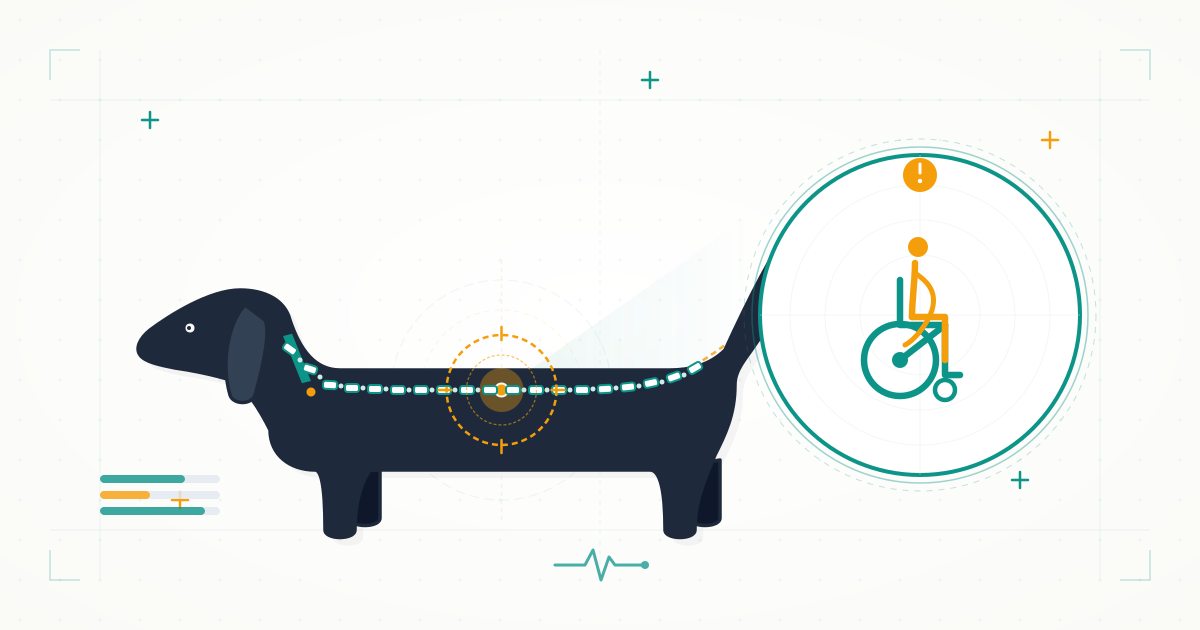
Dachshunds, commonly referred to as “sausage dogs” or “wiener dogs,” are popular companions known for their distinct elongated silhouettes, short limbs, and courageous temperaments. However, breed health research shows that their unique physical structure places them at a high risk for spinal health issues. Specifically, veterinary data indicates that approximately one in four Dachshunds will develop Intervertebral Disc Disease (IVDD) during their lifetime.
Due to their chondrodystrophic conformation—a genetic dwarfism resulting in short limbs—Dachshunds possess intervertebral discs that undergo premature degeneration. Calcification of the gel-like center of the disc (nucleus pulposus) can begin in the first year of life. When a disc ruptures, it can compress the spinal cord, causing pain, loss of motor function, and potential permanent paralysis. For owners, understanding the clinical realities, diagnostic processes, and financial aspects of managing IVDD is critical to ensuring the pet’s long-term well-being.
The IVDD Cost Reality
When a Dachshund exhibits spinal distress, the onset is frequently acute, requiring rapid medical or surgical intervention. Veterinary data indicates the following typical cost breakdown for managing an acute episode of IVDD:
- Emergency Examination ($200 - $500): Covers the initial assessment, stabilization, pain management, and neurological staging. Emergency clinics operate 24/7 to handle critical cases.
- Advanced Diagnostic Imaging ($3,000 - $4,000): Magnetic resonance imaging (MRI) is essential to visualize the spinal cord and identify the exact disc space involved.
- Spinal Surgery ($4,000 - $6,000): A hemilaminectomy involves removing a portion of the vertebral bone to access the spinal canal, alleviate pressure on the spinal cord, and excise the degenerated disc material.
- Hospitalization and Post-Operative Care ($1,000 - $2,000): Post-surgical recovery typically requires a hospital stay of three to seven days for monitoring of neurological status and pain control.
- Post-Operative Rehabilitation ($1,500 - $3,000): Modalities such as underwater treadmill therapy (hydrotherapy) reduce weight-bearing forces while encouraging limb movement.
- Total Typical Cost: $9,000 - $12,000+
Given these substantial expenses, owners are frequently faced with difficult financial decisions during an emergency. Pet insurance covering breed-specific conditions can help — verify pre-existing condition clauses and breed exclusions before purchasing. Without coverage, owners may be forced to consider economic euthanasia due to the inability to fund sudden, high-cost emergency treatments.
Pet Insurance for Dachshunds
Selecting the appropriate coverage for a Dachshund requires careful analysis of policy terms, waiting periods, and exclusions. Pet insurance covering breed-specific conditions can help — verify pre-existing condition clauses and breed exclusions before purchasing.
Orthopedic and Spinal Exclusions
Since IVDD is a genetically linked condition in Dachshunds, it is classified as a hereditary disorder. Some basic pet insurance plans exclude hereditary conditions entirely or require a separate rider. Policies should also be reviewed for bilateral exclusions, which could deny coverage for a second spinal disc issue.
Orthopedic Waiting Periods
Standard waiting periods are typically 14 days. However, some providers impose extended waiting periods of six to twelve months specifically for spinal conditions. For Dachshunds, policies with shorter waiting periods are critical to ensure early coverage.
Alternative and Rehabilitation Therapies
Post-operative rehabilitation is crucial for recovery. Verify that the policy covers alternative therapies such as hydrotherapy, acupuncture, chiropractic care, and cold laser treatment.
Deductible and Payout Structures
Per-condition deductibles apply once per unique illness, which is beneficial for recurring conditions like IVDD. Annual deductibles reset every policy year. Policies without lifetime or annual payout limits ensure continuous coverage for high-cost treatments.
The “Note in the File” Warning
The timing of policy enrollment is critical. Pet insurance policies exclude coverage for pre-existing conditions, defined as any illness or symptom occurring before enrollment or during waiting periods.
For Dachshunds, this has significant implications:
- Medical Record Reviews: Underwriters review history upon claim submission. Any notation of back sensitivity, spinal tension, stiffness, or suspected pain prior to policy activation can lead to permanent exclusion of IVDD coverage.
- Early Enrollment: To ensure comprehensive coverage, policies should be established when the dog is a puppy or immediately upon adoption, before any clinical signs appear.
- Waiting Periods: Minor symptoms recorded during the waiting period can exclude the spinal system from future coverage.
Frequently Asked Questions
Can IVDD be prevented?
While IVDD predisposition is genetic, management strategies can reduce spinal strain:
- Weight Management: Maintaining an ideal weight is critical to reduce mechanical stress on the spine.
- Activity Modification: Use ramps to prevent jumping from furniture, and limit stair climbing.
- Proper Support: Support the chest and hindquarters simultaneously when lifting to keep the spine horizontal.
- Harness Usage: Walk the dog with a harness rather than a collar to reduce neck tension.
Does insurance cover acupuncture?
Many comprehensive policies cover alternative therapies like acupuncture, chiropractic care, and cold laser treatment. These are used in conservative management or post-surgical rehabilitation. Verify policy terms for alternative care limits.
What is the prognosis for a Dachshund recovering from IVDD?
Prognosis depends on the severity of spinal cord compression and the speed of intervention:
- Mild to Moderate Cases (Grades 1-3): Dogs experiencing pain or mild coordination issues often recover well with conservative medical management or timely surgical decompression.
- Severe Cases (Grades 4-5): Dogs that have lost motor function or deep pain sensation have a guarded prognosis. For Grade 5 cases (complete loss of deep pain perception), emergency surgery within 24 to 48 hours offers the best chance of regaining mobility.
Data Sources
NAPHIA Annual Report / AVMA Pet Industry Statistics / Breed health research publications.
Frequently Asked Questions
Does pet insurance cover IVDD for Dachshunds?
">-" Yes, but here's the catch: you have to get it before they ever show a hint of a problem. If they so much as yelp jumping off the couch and a vet writes 'suspected back pain' in their chart, IVDD is marked pre-existing forever. Get it the day you bring them home.
How much is IVDD surgery?
">-" You're looking at $8,000 to $12,000. That covers the MRI, the neurologist opening up their spine to relieve the pressure on their cord, and the physical therapy they'll desperately need to walk again.
What is the best waiting period?
">-" You want a policy with a 14-day orthopedic waiting period. Some companies make you wait 6 months for joint or spine coverage. For a Dachshund, 6 months is a lifetime of risk. Read the fine print.