Disclosure: This post contains affiliate links. We may earn a commission at no extra cost to you. Our research is independent and unbiased.
Editorial Note: This article was researched with AI assistance and reviewed by licensed veterinary and insurance professionals before publication.
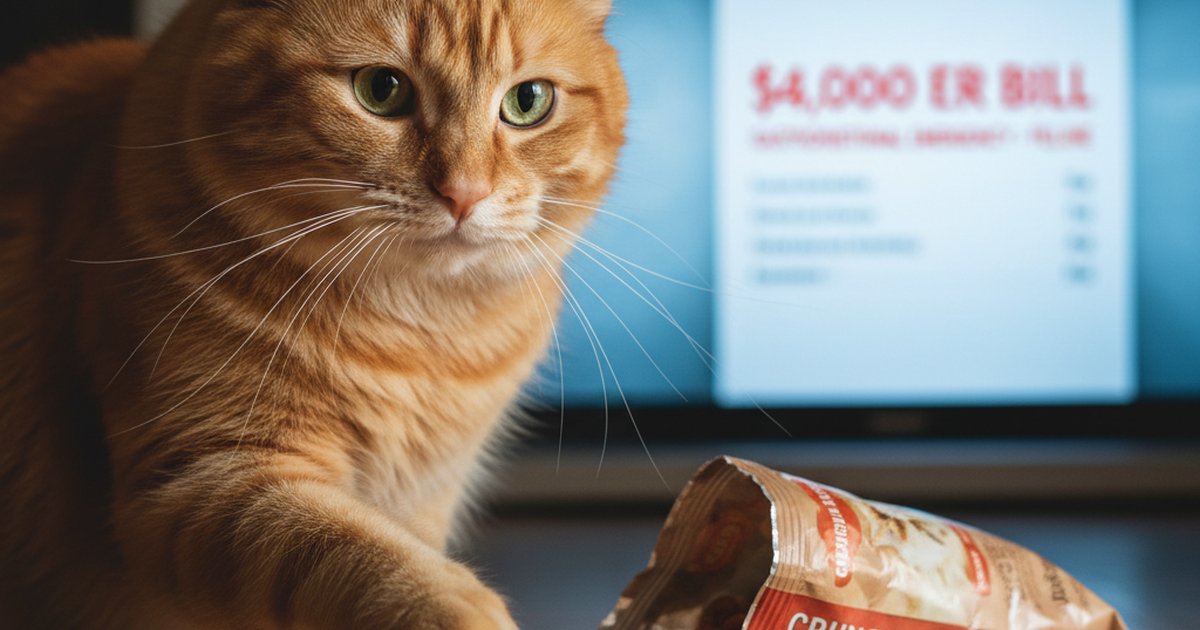
Beyond Dry Cat Food: Why Kibble Might Cost You a $4,000 ER Bill
An ER vet tech explains the painful, expensive link between dry cat food, urinary blockages, and why pet insurance is your ultimate safety net.

Alex Carter
Veterinary Medicine Expert
It’s 2:00 AM on a Tuesday, and I can already smell the metallic, ammonia-heavy stench of concentrated cat urine as the automatic doors of the ER slide open.
An owner rushes in, clutching a plastic carrier. Inside is a three-year-old male tabby cat, yowling in a low, guttural pitch that makes the hair on my arms stand up.
“I think he’s constipated,” the owner tells me, panic in her eyes. “He keeps going to the litter box and pushing, but nothing is coming out.”
I don’t even need to feel his abdomen to know he isn’t constipated. He’s blocked. His urethra is plugged solid with mucus and microscopic crystals, his bladder is swollen to the size of a hard grapefruit, and his kidneys are shutting down.
When I ask what the cat eats, the answer is almost always the same: a 100% dry kibble diet.
After 15 years working in high-volume emergency veterinary hospitals, I can tell you that feeding your cat a purely dry diet is a massive gamble. Moving beyond dry cat food isn’t just a trendy pet care fad; it is a medical necessity. But even with the best diet, genetics and stress can still land your cat on my triage table. That’s why understanding feline nutrition and having a robust pet insurance policy are the two things standing between you and a devastating financial choice.
The Medical Reality of a Dry Diet
To understand why dry food is wreaking havoc on your cat’s internal organs, you have to look at their ancestors. Cats evolved as desert predators. They have an incredibly low thirst drive because nature designed them to get almost all of their hydration directly from their prey. A mouse is roughly 70% water.
Dry kibble is about 10% water.
When you feed a cat only dry food, they exist in a state of chronic, mild dehydration. Their bodies compensate by pulling water out of their urine, making it highly concentrated. In this dark, concentrated urine, minerals like magnesium, phosphorus, and calcium begin to bind together. They form microscopic shards of glass—struvite or calcium oxalate crystals.
In a male cat, the urethra narrows down to the width of a pinhole right at the tip of the penis. It doesn’t take much for a slurry of crystals and inflammatory mucus to form a plug.
Once that plug sets in, urine backs up into the bladder. The pressure builds. The kidneys stop filtering toxins out of the blood. Potassium levels spike, which will eventually cause the heart to stop beating. It is an excruciatingly painful way to die.
The $3,000 Midnight Unblocking
Fixing a blocked cat is not simple, and it certainly isn’t cheap.
When we pull a blocked cat into the treatment room, we have to move fast. We draw blood to check their kidney values and potassium levels. We heavily sedate or anesthetize them. Then, the doctor and I attempt to pass a rigid plastic tomcat catheter through the tip of the penis to flush the plug back into the bladder.
It is bloody, traumatic work. The urethra is inflamed and spasms around the catheter. Once we finally get the line in, we stitch the plastic tube directly to the cat’s prepuce to keep it in place. The cat is then hospitalized in a cage for two to three days on continuous IV fluids to aggressively flush the toxins out of their kidneys.
The bill for this emergency unblocking? You are looking at a minimum of $1,500, but in most modern ERs, it easily hits $2,500 to $3,500.
If your cat blocks a second or third time—which is highly common—we have to perform a Perineal Urethrostomy (PU surgery). We surgically amputate the penis and reconstruct the urinary tract to create a wider opening, essentially making the male cat’s anatomy look like a female’s.
That surgery will run you anywhere from $4,000 to $7,500.
Chronic Kidney Disease: The Silent Killer
It isn’t just male cats suffering from an all-kibble diet. Older female cats are prime candidates for Chronic Kidney Disease (CKD). Years of filtering highly concentrated urine forces the kidneys to work in overdrive. Eventually, the kidney tissue literally shrivels and scars.
You won’t notice it until they lose 70% of their kidney function. Suddenly, your cat is drinking out of the dog’s bowl, losing weight, and vomiting clear foam.
Managing CKD requires regular blood panels, subcutaneous fluids you have to inject under their skin at home, phosphate binders, and expensive prescription renal diets. Managing a CKD cat can easily cost $150 to $300 every single month for the rest of their life.
Moving Beyond Dry Cat Food
My blunt advice from the treatment room: get your cat off a 100% dry food diet today.
Even the cheapest grocery store canned cat food has more moisture than the most expensive, grain-free, premium dry kibble on the market. Adding wet food to your cat’s daily routine physically flushes their bladder. It dilutes the urine so crystals cannot form.
Invest in a cat water fountain, as the sound of running water triggers their instinct to drink. Offer them low-sodium chicken broths. Do whatever it takes to get moisture into their system.
Why You Need Insurance Before the First Cry
Here is the dirty secret of veterinary medicine: diet is not a magic shield.
While moving beyond dry cat food drastically lowers the risk of urinary blockages and kidney disease, cats can still develop Feline Lower Urinary Tract Disease (FLUTD) or Feline Idiopathic Cystitis (FIC) simply from stress. A new baby, a stray cat outside the window, or a change in your work schedule can cause their bladder lining to become violently inflamed, leading to a blockage.
This brings me to the absolute worst part of my job: economic euthanasia.
There is nothing more soul-crushing than handing an estimate for $3,000 to an owner who only has $400 in their bank account. The cat on the table is young, otherwise healthy, and completely fixable. But the owner cannot afford the unblocking procedure. Because a blocked cat will die a painful death within 48 hours, the only humane option left is euthanasia.
We literally have to put a fixable animal in a body bag because of money. I have held crying owners in the middle of the night as they said goodbye to their best friend over a urinary blockage. It never gets easier.
This is exactly why you need pet insurance, and you need it before there is a problem.
If you wait until your cat is straining in the litter box to buy a policy, you are too late. Every insurance company will flag the blockage as a pre-existing condition, and they will never cover a dime of that cat’s urinary care for the rest of its life.
If you get a policy when they are a healthy kitten, you are protected.
- Trupanion is widely considered the gold standard in the vet industry for cats prone to chronic issues. They use a per-condition deductible. If your cat develops CKD or chronic urinary issues, you only meet the deductible once for that specific disease. After that, Trupanion pays 90% of the covered costs for the rest of the cat’s life.
- Pets Best and Lemonade offer highly customizable, budget-friendly plans. If you just want a safety net to ensure you never have to euthanize your cat over a sudden $4,000 PU surgery, these companies are excellent choices.
- Nationwide offers comprehensive plans that, depending on the tier, can sometimes help offset the cost of the expensive prescription urinary diets (like Hills c/d or Royal Canin SO) your vet will mandate after a blockage.
The Bottom Line
A bag of dry kibble is convenient, but the long-term medical fallout is anything but. Start integrating wet food into your cat’s diet to protect their kidneys and bladder.
More importantly, secure a pet insurance policy today. Stop treating insurance like a luxury item and start viewing it as a critical piece of your pet’s healthcare plan. When you are standing in my ER at 2:00 AM, terrified for your cat, the only thing you should be worrying about is giving them a kiss on the head before surgery—not whether your credit card will decline at the front desk.
Frequently Asked Questions
Can I just add water to my cat's dry food to prevent urinary issues?
You can try, but cats are notoriously picky and might refuse soggy kibble. Also, wet kibble breeds bacteria rapidly if left sitting out at room temperature. Transitioning to a canned wet food diet is much safer and more effective for increasing their moisture intake.
Does pet insurance cover prescription urinary diets?
Standard accident and illness policies usually don't cover the cost of the food itself. However, some companies offer wellness add-ons that might chip in, and Trupanion sometimes covers a percentage of therapeutic diets if they are specifically prescribed for a covered condition. Always read the fine print.
How do I know if my cat is blocked or just constipated?
If you have a male cat who is repeatedly going to the litter box, squatting, crying, and producing either nothing or just tiny drops of blood, treat it as a urinary blockage immediately. True constipation in young cats is rare; a blocked urethra is incredibly common and will kill them within 48 hours without ER intervention.