Disclosure: This post contains affiliate links. We may earn a commission at no extra cost to you. Our research is independent and unbiased.
Editorial Note: Cost data in this article is sourced from published veterinary industry reports (NAPHIA, AVMA, VPI). This is an informational resource — not veterinary or financial advice. For health concerns, consult a licensed veterinarian.
ACL Surgery Cost for Dogs: 2026 Price Breakdown & Insurance Guide
2026 breakdown of dog ACL (CCL) surgery costs — TPLO, TTA, and Lateral Suture price ranges, what affects the bill, and how to budget for recovery.

Pet Insurance Guide Research Team
Independent Analysts
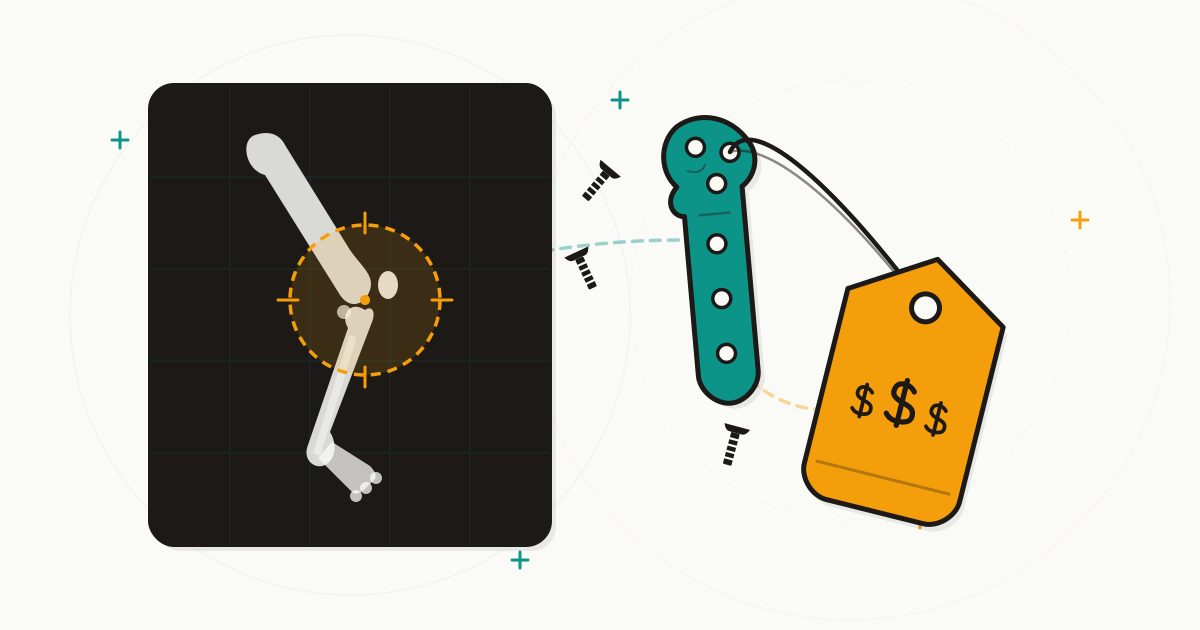
A ruptured cranial cruciate ligament (CCL)—often referred to as a canine ACL tear—is a common hind-limb injury in dogs. Diagnosed via maneuvers like the cranial drawer test, a tear leads to joint instability and lameness. According to published cost surveys, the average cost of dog ACL surgery in 2026 ranges from $3,000 to over $7,000 per knee. This depends on the selected procedure, the dog’s weight, and the clinic’s location.
Below is a breakdown of surgical options, regional costs, and how pet insurance policies that cover orthopedic conditions can offset these costs — verify waiting periods before purchasing, as most require 6 months before cruciate coverage begins.
The 3 Main Types of ACL Surgery & Costs
Veterinary surgeons select procedures based on size, weight, and activity level. Stabilizing a small breed involves different mechanical requirements than treating a large, active breed.
1. Tibial Plateau Leveling Osteotomy (TPLO)
- Best for: Medium, large, and active dogs (e.g., Labrador Retrievers, Rottweilers).
- Cost: $4,500 – $7,500+
- Details: The surgeon cuts the top of the tibia, rotates it to reduce the slope of the knee, and secures it with a plate and screws. This eliminates the need for a cruciate ligament. The specialized equipment and surgery require a veterinary specialist, making it the gold standard for larger dogs.
2. Tibial Tuberosity Advancement (TTA)
- Best for: Medium to large dogs with specific joint angles.
- Cost: $3,500 – $5,500
- Details: The surgeon cuts the front of the tibia, advances it forward, and inserts a titanium cage. This alters the patellar tendon pull to stabilize the knee. TTA offers a similar recovery to TPLO but is sometimes slightly less expensive.
3. Lateral Suture (Extracapsular Stabilization)
- Best for: Small dogs under 30 pounds or geriatric, low-activity dogs.
- Cost: $1,500 – $3,000
- Details: The vet loops a heavy nylon monofilament suture outside the joint capsule to stabilize the knee while stabilizing scar tissue builds.
Weight Class Consideration: Surgeons advise against Lateral Suture for dogs over 40 pounds. Large, active dogs often break the suture during early recovery, requiring a second surgery like TPLO and doubling overall costs.
2026 Cost Data: The Real Bills
Geographic location significantly impacts fees. Below is the regional cost breakdown for a TPLO surgery:
| Region | Low Estimate | High Estimate | Average |
|---|---|---|---|
| New York City, NY | $5,500 | $8,500 | $7,000 |
| Los Angeles, CA | $5,200 | $8,000 | $6,600 |
| Austin, TX | $4,000 | $6,000 | $5,000 |
| Chicago, IL | $4,500 | $6,800 | $5,600 |
| Miami, FL | $4,200 | $6,500 | $5,350 |
| Rural Midwest | $3,000 | $4,500 | $3,750 |
These estimates cover anesthesia, the procedure, and post-op medication. They rarely include follow-up radiographs (roughly $400 at 8 weeks) or physical rehabilitation.
The Ugly Truth About Pet Insurance and ACLs
Pet insurance policies that cover orthopedic conditions can offset these costs — verify waiting periods before purchasing, as most require 6 months before cruciate coverage begins.
Because cruciate repairs are high-cost claims, insurers evaluate them under strict constraints.
The Bilateral Exclusion Policy
If a dog experiences a cruciate tear in one leg before policy enrollment, insurers typically exclude coverage for both knees. Gait biomechanics show that a dog favoring one injured leg shifts weight to the opposite leg, causing a tear in the healthy knee within 12 to 24 months. Insurers exclude contralateral knees based on this high risk.
Real Claim Case Study: Bella the Labrador
An actual insurance claim demonstrates the financial breakdown:
- Patient: 4-year-old Labrador Retriever
- Injury: Cruciate tear from slipping on wet grass
- Procedure: TPLO in Chicago, IL
- Veterinary Bill: $6,200
- Insurance Details: 90% reimbursement, $250 deductible
- Owner Expense: $250 deductible + $595 co-payment (10% of remaining balance) = $845
- Insurance Payout: $5,355
Can You Skip Surgery entirely?
Some pet owners consider conservative management, using orthotic braces, strict confinement, and pain medication.
| Feature | Surgery (TPLO) | Conservative Management |
|---|---|---|
| Expected Outcome | 90% to 95% return to function. | Less than 50% success rate for dogs over 30 lbs. |
| Arthritis Risk | Low to moderate. | High probability of severe osteoarthritis. |
| Recovery | 8 to 12 weeks of restriction. | Chronic, lifelong lameness. |
| Estimated Cost | $4,500 – $7,500+ | $500 – $1,000 initially, plus lifetime medication. |
For active, heavier dogs, conservative management rarely stabilizes the knee, resulting in accelerated bone-on-bone grinding and severe arthritis.
The Bottom Line
For large breed dogs, Tibial Plateau Leveling Osteotomy (TPLO) is the primary method to restore stable, pain-free movement.
To manage these expenses, pet insurance policies that cover orthopedic conditions can offset these costs — verify waiting periods before purchasing, as most require 6 months before cruciate coverage begins. Securing coverage before any lameness occurs is vital, as pre-existing conditions are excluded.
Get a Quote for Pet Insurance Here
Frequently Asked Questions
How much does ACL surgery cost for a dog in 2026?
In 2026, dog ACL surgery costs between $3,000 and $7,000 per knee. The price depends on the procedure type, the dog’s size, and the veterinary clinic’s location.
Does pet insurance cover ACL surgery?
Pet insurance policies that cover orthopedic conditions can offset these costs — verify waiting periods before purchasing, as most require 6 months before cruciate coverage begins. Pre-existing symptoms diagnosed prior to coverage are excluded.
What is the recovery time for dog ACL surgery?
Recovery spans 8 to 12 weeks. The first four weeks require strict crate rest, with running and jumping prohibited. Premature physical activity can compromise the implants, necessitating revision surgery.
Sources
- American College of Veterinary Surgeons (ACVS) - Cranial Cruciate Ligament Disease
- North American Pet Health Insurance Association (NAPHIA) - State of the Industry Report 2026
Data Sources
- NAPHIA Annual Report on Pet Insurance
- AVMA Pet Industry Statistics
- Veterinary Surgery journal procedure cost surveys
Frequently Asked Questions
How much does ACL surgery cost for a dog in 2026?
Look, it's not cheap. You're looking at anywhere from $3,000 to over $7,000 per knee in 2026. TPLO is the most expensive because a specialist actually cuts and plates the bone, but it's the only option I trust for bigger dogs. Where you live plays a massive role in that final bill.
Does pet insurance cover ACL surgery?
Yes, but they are incredibly strict about it. If your dog was limping before you bought the policy, it's a pre-existing condition and they won't pay a dime. Plus, most companies have a mandatory waiting period—sometimes up to 6 months—specifically to prevent people from buying insurance the day after their dog blows a knee.
What is the recovery time for dog ACL surgery?
You are in for a long, exhausting 8 to 12 weeks. The first month is absolute strict kennel rest. No jumping on the couch, no running in the yard, no stairs. If you let them loose too early and they slip, you can destroy thousands of dollars of surgical work in one second.